 By blogziro123@gmail.com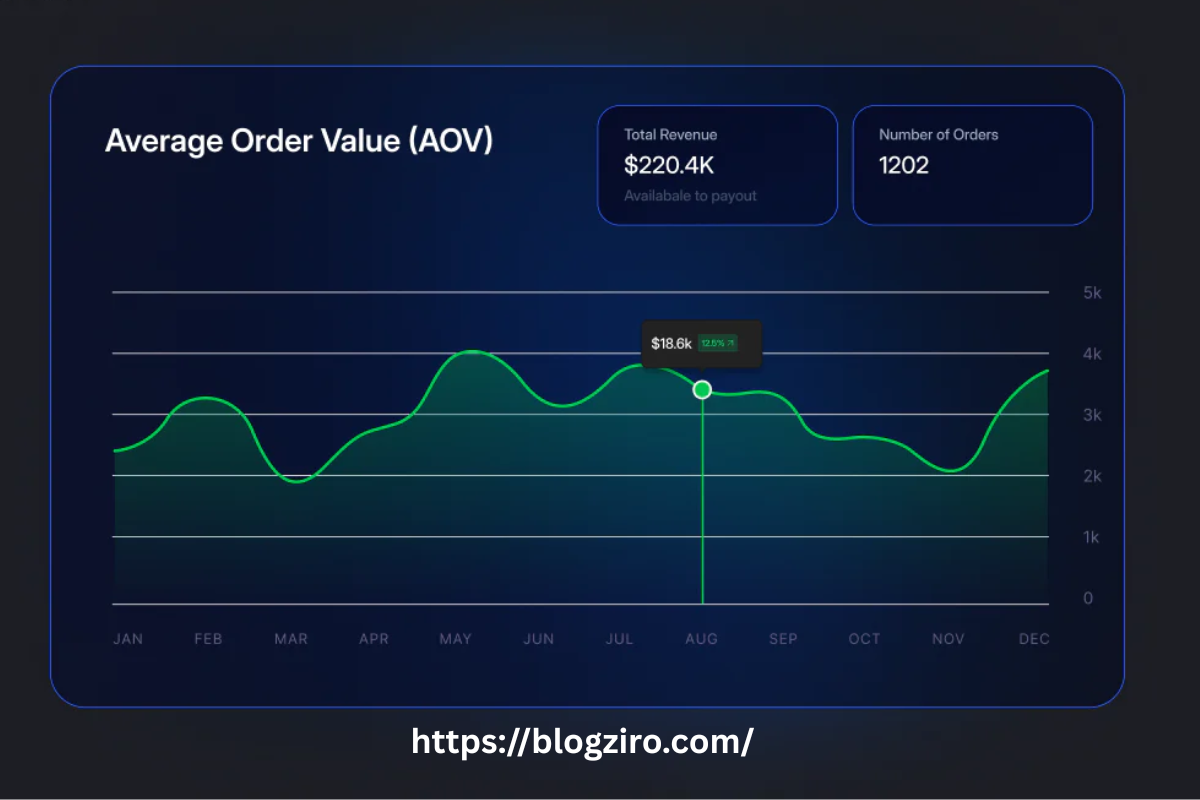
Total Order Value (TOV)
Understanding the financial health of your eCommerce business goes beyond just tracking sales. One of the most important metrics that can provide actionable insights is Total Order Value (TOV). Whether you’re a budding online store owner or a seasoned eCommerce manager, mastering TOV can help you optimize revenue, improve customer retention, and make smarter marketing decisions. In this guide, we’ll break down everything you need to know about TOV, how to calculate it, and why it matters for your business growth.
What is Total Order Value (TOV)?
Total Order Value (TOV) is the cumulative monetary value of all orders placed by customers over a specific period. Unlike average order value (AOV), which looks at the average spend per transaction, TOV focuses on the complete picture of revenue generated by all orders. It’s an essential metric for understanding how your sales strategies and promotions impact overall revenue.
TOV is particularly useful for online retailers because it helps identify trends in customer purchasing behavior. For example, a sudden increase in TOV could indicate successful upselling or promotional campaigns, while a decline might suggest a need to improve pricing, offers, or customer experience. By tracking TOV consistently, businesses can gain deeper insights into revenue flow and make data-driven decisions for growth.
Related Keywords / LSI: cumulative order value, total revenue from orders, eCommerce sales metrics.
How to Calculate Total Order Value?
Calculating Total Order Value (TOV) is simpler than it sounds. At its core, TOV is the sum of all order amounts over a given timeframe. For example, if your store received 100 orders in a month, you would add up the total revenue from all those orders to determine your TOV.
Here’s a practical step-by-step approach:
-
Collect Order Data: Gather all orders for the period you want to analyze, including product prices, quantities, and any additional fees.
-
Sum Up Order Values: Add the total value of each order, including shipping and taxes if you want a complete revenue picture.
-
Review & Analyze: Compare your TOV month-over-month to track growth or identify patterns.
For businesses that deal with subscriptions, bundles, or multi-item orders, make sure to include all applicable charges to get an accurate TOV. A precise calculation helps you make informed decisions regarding marketing campaigns, inventory planning, and customer retention strategies.
Tip: Tools like Shopify Analytics, WooCommerce reports, or Google Analytics eCommerce tracking can simplify this process, allowing you to calculate TOV automatically.
Total Order Value Formula (TOV)
The Total Order Value formula is straightforward, but understanding it conceptually can help you apply it effectively across different business models. The basic formula is:
Total Order Value (TOV)=Number of Orders×Average Order Value (AOV)\text{Total Order Value (TOV)} = \text{Number of Orders} \times \text{Average Order Value (AOV)}
Where:
-
Number of Orders is the total transactions in the selected period.
-
Average Order Value (AOV) is the mean value of all orders, calculated as total revenue divided by the number of orders.
For instance, if your store received 500 orders last month and the AOV was $75, the TOV would be:
500×75=37,500500 \times 75 = 37,500
This formula works well for high-level analysis, but if you want a more granular approach, you can sum the value of each individual order directly, especially if order sizes vary significantly. Using the formula consistently will allow you to track trends, forecast revenue, and evaluate the effectiveness of your pricing and promotional strategies.
Internal Linking Opportunity: Link to articles like “How to Increase Average Order Value (AOV)” or “eCommerce Revenue Forecasting Techniques” to enhance user engagement and SEO.
TOV vs. AOV: What is the Difference?
Many eCommerce professionals often confuse Total Order Value (TOV) with Average Order Value (AOV), but these metrics serve different purposes.
-
TOV measures the total revenue generated by all orders over a period. It gives you a macro-level view of your sales performance.
-
AOV measures the average spend per transaction, giving you a micro-level insight into individual customer behavior.
Understanding the distinction is crucial. For example, a marketing campaign might increase AOV by encouraging customers to purchase more per order, but if the number of orders drops, TOV may not increase proportionally. Conversely, a seasonal sale could increase the number of orders without significantly impacting AOV, leading to a rise in TOV. By monitoring both metrics together, businesses can optimize marketing strategies and inventory management to maximize overall revenue.
Tip: Track both metrics in tandem to identify whether growth is coming from more orders, larger orders, or a combination of both.
Total Order Value Calculator (TOV)
A TOV calculator is a helpful tool for quickly estimating revenue potential. It can save time and provide actionable insights for planning marketing campaigns, promotions, or sales forecasts. Most calculators allow you to input the number of orders and average order value to get an instant TOV result.
Here’s a simple example:
-
Number of Orders: 200
-
Average Order Value (AOV): $50
-
Total Order Value (TOV) = 200 × 50 = $10,000
Many online platforms provide built-in calculators, but you can also create your own using Excel or Google Sheets. A dynamic TOV calculator that automatically updates based on sales data can be especially useful for high-volume stores, helping teams make real-time business decisions.
Internal Linking Opportunity: Consider linking to a guide like “Top Free eCommerce Tools to Track Revenue” for readers who want hands-on resources.
eCommerce TOV Calculation Example
Let’s look at a practical scenario to understand how TOV works in the real world:
Imagine you run an online store selling beauty products. In February, you recorded the following orders:
| Order # | Order Amount ($) |
|---|---|
| 001 | 45 |
| 002 | 60 |
| 003 | 35 |
| 004 | 80 |
| 005 | 50 |
To calculate TOV:
TOV=45+60+35+80+50=270TOV = 45 + 60 + 35 + 80 + 50 = 270
Here, the Total Order Value (TOV) for February is $270.
Now, let’s say the following month, you launch a bundle promotion. Orders increase, and the TOV rises to $500. This jump not only indicates increased revenue but also reflects successful marketing, upselling, and customer engagement strategies. By tracking TOV consistently, you can identify which campaigns or strategies are truly driving revenue growth.
Tip: Pair TOV tracking with customer segmentation to see which groups contribute most to revenue and target them effectively.
Everything You Need To Master Financial Modeling
Understanding TOV is a stepping stone to mastering broader financial analysis. Financial modeling for eCommerce involves predicting revenue, costs, and profitability based on metrics like TOV, AOV, and conversion rates. By mastering TOV, you gain insights into customer spending behavior, allowing you to make smarter forecasts and allocate budgets efficiently.
Pro Insight: Start by creating simple Excel models to project monthly TOV based on historical trends. Then layer in variables such as seasonal fluctuations, promotions, and customer acquisition efforts for more advanced forecasts.
7 Free Financial Modeling Lessons
If you’re serious about leveraging TOV for business growth, consider supplementing your knowledge with structured financial modeling lessons. Free resources often include:
-
Basics of Excel for financial modeling
-
Forecasting revenue with sales metrics
-
Understanding profitability ratios
-
Calculating cash flow from eCommerce operations
-
Advanced revenue modeling techniques
-
Sensitivity analysis for sales projections
-
Scenario planning using TOV and AOV
These lessons help translate raw metrics like TOV into actionable business strategies, giving you a competitive edge in managing your online store’s financial health.
Conclusion:
Total Order Value (TOV) is more than just a number—it’s a powerful metric that reflects your store’s overall revenue performance. By understanding how to calculate TOV, comparing it with AOV, and using practical tools and examples, you can make informed business decisions, optimize marketing strategies, and drive long-term growth. Start tracking TOV today, and let it guide your path toward a more profitable eCommerce business.